Wednesday, 14 November 2012

Shepherd Neame India Pale Ale and Double Stout


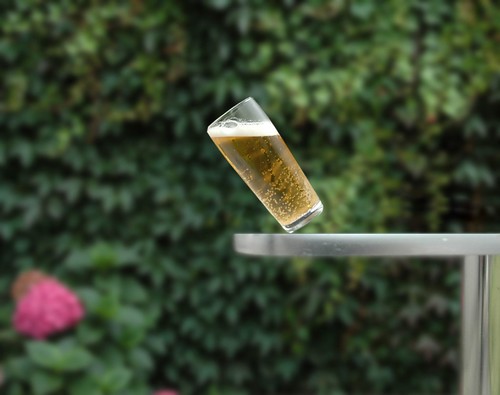
I love that some of the regional breweries are looking sideways, forwards and backwards in order to appeal more broadly to different drinkers. Fuller’s have got the Past Master’s series, the barrel-aged beers and delightful seasonals; Adnams have long made interesting seasonal beers and limited-run specials; Brains have built a craft brewery on the side for producing different beers, including a run of IPAs; just yesterday a bottle of Progress arrived from Black Sheep, a special 10% ABV beer to celebrate 20 years of brewing, and that sits nicely beside their excellent Imperial Stout; and Shepherd Neame have been brewing small batch beers on a handsome little pilot system for a few years now without really shouting about it, then they released Generation Ale, a wonderful 9% ABV strong ale, and now they’ve brought out an India Pale Ale and Double Stout.


Being a Man of Kent, I’ve grown up with a constant presence of Shepherd Neame, with most drives through the county taking you past at least one pub with their familiar red sign, yet I’ve never really drunk much of the beer. But this year I’ve had four Sheps beers which have massively impressed me. The Generation Ale is an excellent beer, aged in tank for a long time, it’s got a deep complexity of chewy malt and spicy, fragrant hops, think roasted oranges, sherried fruit and toast. There was also a green-hopped beer, 5.5% ABV, and a real ripper of fresh hop flavour, pungent and intense. And now there’s the India Pale Ale and Double Stout, historic-styled, in liquid and design, they look back to old brewing books and make the styles relevant today.


The India Pale Ale (6.1% ABV) is a brutal thwack of Kent-grown Fuggles. Amber in colour, the flavour is a wild spectrum of hop from earth to berries to chocolate and wood. The bitterness is uncompromising, hitting the tongue with bracing force, balanced by caramel and vanilla in the body. It’s got that indefinable Fuggles-thing which makes it such an interesting hop, a flavour that’s almost impossible to describe but marvellously, massively English and in this beer it's really showing off.


Double Stout (5.2% ABV), for me, is completely evocative of early November. You know how you can walk outside on a clear cold night, when fireworks have been exploding all around, and the air smells of treacle, smoke and leaves. This beer makes me think of that. It’s black, full of a roast bitterness, ashy smoke, liquorice and an intense almost-savoury dry, dark malt character which clings onto a bold smack of bitter hops.  

Both beers are excellent. There’s a fullness, complexity and depth to them and they are great side-steps from the core products. I think they look brilliant as well – as soon as I saw the design, I wanted to drink the beers.

It’s great to see regional breweries stepping outside of their best bitter comfort zones and producing wider varieties of beers. One thing most of these regional breweries have over others is history. It’s good to see Shepherd Neame using it and making it relevant today.  


All of these images are from Oh Beautiful Beer. From this post and this one. 

Wednesday, 7 November 2012

Santorini Dreaming with Yellow Donkey


This weather is shit. It’s cold. It’s either grey or night time. My Converse have got holes in them so I get wet feet in the puddles. It sucks.

I want a beer but I don’t want a stout. Drinking stout feels like I’m embracing the weather, welcoming it in. But mourning it feels more appropriate. Mourning the blackness with a black beer that tastes like a bonfire which got extinguished by the rain.

So I need something far cheerier to drink and make me think of sunshine. I need a Yellow Donkey.

SantoriniBrewing Company, in Santorini, Greece, was started by a Greek, a Serbian, an American and an Englishman. I know the Englishman. I like him because he brings me bottles of Yellow Donkey beer. His name is Steve Daniel. He’s a wine buyer and also likes beer. He likes it so much he’s started two breweries.
  

Yellow Donkey is their main product and it’s nothing like the best-known Greek beer, Mythos (which I bloody love and won’t hear a bad word said against it, alright). Yellow Donkey is hopped with Aurora, Styrian Goldings, Cascade and Motueka, it’s 5% ABV, unfiltered and unpasteurised. And it’s great on a hot, sunny day, or a day you want to pretend is hot and sunny. Just think about how good a soft-bodied, smooth, clean pale ale would taste, one with a delicate peppery hop background and a fragrant juicy, pithy, peach and passion fruit aroma. This is new Greek beer and it’s seriously good. It makes me wish I was watching the beautiful sunset.

Photo from here
They make other beers, too. There’s a Red Donkey which uses similar hops but spikes them with a poky Belgian yeast. And Crazy Donkey is an IPA, big and bold, something to share.

Drinking the beer now, I close my eyes and I feel the sun – something about that combination of hops and the soft body evokes summer and freshness. But if you can’t get any Yellow Donkey (and you need to go to Santorini to get it) then don’t worry too much. Like I said, Steve has opened a second brewery and that one’s in London. Look out for Rocky Head. They make a very good new world pale ale that’s bursting with hop freshness.


Sometimes it’s nice to have a beer that can take you places. Especially warm, sunny places. Now I want to go and drink it fresh from the brewery... 

Friday, 2 November 2012

Forget IBU, think about BU:GU


What does 10 IBU, 50 IBU or 100 IBU actually mean to the drinker?

Not a lot.

Why?

Because it’s all about context. And I’m about to get geeky...

50 IBU (International Bitterness Units) will make a light lager brutal with bitterness. 50 IBU will make a strong stout seem cloyingly sweet.

It’s more relevant to look at the balance between bitterness and sweetness, so let’s throw away IBUs and bring in the BU:GUs (Bitterness Units: Gravity Unit).

BU:GU is the bitterness ratio and it was first introduced by Ray Daniels in Designing Great Beers (which is a great book!). It measures hop bitterness against malt sweetness where the higher the number, the higher the bitterness is to the sweetness in the beer. It’s calculated by dividing the IBU by the original gravity of the beer. So, with a beer of 25 IBUs and an original gravity of 1050 (you drop the first two digits of the OG unless you’re starting with a monster beer that’s in the 1100s, in which case you just drop the first digit) you get 0.5. On the BU:GU scale, that’s balanced – a score of 1 would be a beer with a very high perceived bitterness whereas 0.1 would be very low. (There’s a list of BU:GUs here and there's a colour chart of BU:GUs here)

Image from here

But then, to make it less straight-forward, another factor comes in: final gravity, or the apparent attenuation of the beer (the amount of sugars which are left in the finished beer). It’s fine knowing the original gravity but obviously a beer with a lower final gravity (or higher attenuation) will be drier in the finish with less residual sugars, which will then influence the perception of bitterness.

The Mad Alchemist has come up with a formula for figuring out the RelativeBitterness Ratio (RBR) against the same numerical scale as BU:GU (here's another colourful chart). Here’s what they say:

“ADF = Apparent Attenuation. 0.7655 is the average ADF of all beer styles. Since the Relative Bitterness Ratio takes into account balance relative to all beer styles, it uses this as a constant. You are comparing your beer's ADF against the average ADF (0.7655), then adjusting the standard Bitterness Ratio accordingly (it goes up if your ADF is higher than average, down if your ADF is lower than average). Just like BU:GU, higher numbers mean more bitter, lower numbers mean less bitter, and 0.5 is roughly average balance.”

Here’s the sum for a beer with 25 IBUs, OG of 1050 and 80% apparent attenuation:

RBR = (BU:GU) x (1 + (ADF - 0.7655))
RBR = (25/50) x (1 + (0.8 - 0.7655))
RBR = 0.5 x (1 + (0.0345))
RBR = 0.5 x 1.0345
RBR = 0.51725

So if you have two beers with the same IBU and same OG but one has a high apparent attenuation (85%, for example) and one with a low apparent attenuation (55%), they perception of bitterness will be different in both. Get it?

We know the IBU scale and understand that 10 is very low and 100 is very high, so it’ll be just as easy for drinkers to take notice of a BU:GU scale where 0.1 is very low and 1.0 is very high. While IBUs are an interesting piece of information, it means little without measuring it against the sweetness in the beer. That’s where a BU:GU score, worked out according to the
Relative Bitterness Ratio, is more relevant and revealing.


Wonderful top photo from here

Monday, 22 October 2012

The World Atlas of Beer


Two books I return to again and again are The World Guide to Beer and Beer Companion, both by Michael Jackson. Comprehensive in scope and lyrical in style, they are classics and also still relevant now. But the world-reaching beer books needed updating to show how much and how fast beer continues to evolve.

Enter Stephen Beaumont and Tim Webb with The World Atlas of Beer. It’s a sumptuous snapshot of the world of beer as it is today, taking the work of Michael Jackson and flinging it forward. It’s kept the history, the classic styles and beers, the photos of pouring a perfect pils, tables to help you pair beer and food better, the focus on different countries and close looks at important styles, and then the Atlas gives new insights into how beer is changing and how things are right now.

I like what Beaumont and Webb have done. They achieve a completeness of information by being concise, informative and current, their style is direct and simple by using a similar breezily informative tone that Jackson employed so wonderful, it’s an omniscient approach that’s carefully selected and the information they give us is delivered in a way which makes it easy to understand but it’s also truth-worthy and authoritative.

The joy of the book is in the way it looks, the maps, the beautiful photos – it’s a travel book as much as a ‘drink me’ book – as well as the actual information on the page which is insightful and interesting. Perhaps more than anything else, it makes me want to know more and while I want more on the pages in front of me (just more pages, more words, more beers), it also works like a gentle nudge out into the world where I can find these things out for myself: it gives a sip which you can chase and turn into a gulp.  

One thing that feels evident is that this is the first of many evolutions of the Atlas. This one modernises what Michael Jackson wasn’t able to modernise himself. The next, I imagine, will jump it forward and put more attention on newer beer styles alongside classics – for example, biere de garde gets a spread but IPA, America’s most popular craft beer style, does not. Beer is always changing and evolving and the words written about it always need to be updated alongside the liquid – the Atlas has the ability to be that book which is always ‘current’.

The World Atlas of Beer is a reverential development of Michael Jackson’s books but it also does more than merely polishing up Jackson’s work – like reading The World Guide to Beer and then Beer Companion, the Atlas moves beer seamlessly forward with a new look at world beer. Everyone who likes beer should buy it. 


Thursday, 18 October 2012

GABF versus GBBF


*TICK*

That’s my pencil scratching off a beer-thing that I’ve wanted to do for years: the Great American Beer Festival.

Held in Denver, Colorado, every year, it’s an outrageously big celebration of American brewing. In 2012 the festival numbers were record-breaking: 578breweries pouring 2,700 beers to 49,000 attendees. I was there judging the competition which was also record-breaking: 4,338 beers submitted by 666 breweries and tasted by 185 judges across 84 style categories.

But what’s GABF like compared to GBBF?

GABF runs four four-hour-ish sessions. GBBF runs for five days, 12-10pm.

GABF tickets are $65 a session (there’s a members only session at $55) while GBBF are £10; GABF’s cost includes all the beer you’ll drink whereas you pay for each beer at GBBF.

Measures at GBBF are one-third-pint, half-pint and pint. GABF is a 1oz pour. This is an interesting one as I thought that a 1oz pour would suck, but it doesn’t. Sure, there’s no time to sit back and relax by sipping on a half, but it gives the opportunity to taste a lot of beer and 1oz isn’t really that small when you’re there and doing it. Plus, if you like the beer you can just order another one and another until satisfied. And if you don’t like it then there’s only a mouthful to drink or dump – at GBBF I’ve had many beers which I’ve bought and then dumped because they aren’t what I wanted.

It’s worth lingering on this point because it’s important. I liked being able to taste 50, 70, 100 beers, or whatever it was, in four hours. And it is about tasting, not drinking (though it’s very possible to get very drunk if you go hard). With so many beers being poured, most of which I’d never had or even heard of, I wanted to drink as many as possible, jumping from IPA to pilsner to saison to stout to sour beer to whatever was on the next table. But there is a downside to this: the whole thing feels frantic as if there’s a rush to get the next beer and the next – there’s a casual, sit-down-and-enjoy-it feel to GBBF while GABF feels like a race.


I like the layout of GABF: it’s broken down geographically but then each brewery has their own space, compared to the large regional bars at GBBF (which require cartography lessons to navigate). Brewers can pour their own beers at GABF, which is great, though Andy Crouch would like to see more brewers there and I’d agree. This also means that breweries can put things out on their bars – beer info, POS stuff, whatever. I think brewers pouring their own beer at GBBF would be a great thing, as would more information about the beers we’re drinking, though this would involve a complete change in how things are done (similar to what was achieved at the awesome Independent Manchester Beer Convention).

This layout also creates a situation where drinkers line-up for specific breweries. Over the four sessions, a handful of breweries consistently had lines of people waiting to try their beer – Dogfish Head, Cigar City, Russian River, Crooked Stave. I have never seen a line at GBBF waiting to try the beer from one brewery, instead it becomes a big bundle at the bar as drinkers gun for the Champion Beer of Britain or some geek treat on the foreign bar. The queuing was actually a good thing, I reckon – there’s a buzz that comes with that.

The size of GABF kept on surprising me: it’s huge (just look at the map). Overwhelmingly big, in fact. But at the same time that’s good – it shows the sheer, exciting scale of American craft beer.

Olympia is a nicer place to drink than the Denver Convention Centre.


The beers: 2,700 beers at GABF and around 500 beers at GBBF. When I go to GBBF I spend most of my time at the foreign beer bar. Imagine that multiplied by about 300 and that’s what GABF was like for me. It’s not fair to compare the volume (500 is, after all, more than I could manage over five days anyway), but the range is more relevant to compare: there was simply more variety at GABF – you name it and it was there.

Like at GBBF, at GABF some breweries can choose to take up bigger bars. This gives them more presence, means they can pour more beer and can put more personality into it. At GBBF we get regional breweries and sometimes they excite and surprise with what they pour – this year at GBBF Twaites had a couple of crackers, Fuller’s had the superlative Fuller’s Reserve, Greene King poured 5X. At GABF it was bigger breweries who took these corner plots but still ones which most drinkers want to get to: Odell, Oskar Blues, Dogfish Head, New Belgium, Bear Republic, Anchor, Sierra Nevada...

Food at GBBF is normal stomach-fillers like pies, pasties and burgers, plus the wonderful pork scratchings. I expected good food at GABF but I didn’t see it: pizza was pretty much all you got.

Pretzel necklaces. These are a curiosity. For three days I saw people walking around with a necklace of pretzels hanging on their chest. I’d seen photos of these before and assumed there’d be a stall inside selling them. There isn’t. This surely means that all those thousands of pretzel chains were homemade. How the hell did that craze start?!

Photo from here
The dropped-glass cheer. I figured this was a unique British element of GBBF: the chime of broken glass which sends a wave of cheers through the huge hall. This is not unique to GBBF and it also happens at GABF. Both are funny in their own ways: at GBBF a glass costs £3 so the butter-fingered drinker has to go and buy another one at the expense of three more pounds and the laughter of their mates; at GABF three of the four sessions use plastic glasses which, when dropped, bump around like a rugby ball and bounce in all sorts of different directions as their owner scrambles to catch it while everyone around them cheers. 

Award-winning beers. At GBBF there’s always a hush as the Champion Beer of Britain is announced, this is often followed by some ‘what the fucks’ which is then followed by people casually, but at great speed, heading to find that beer and drink it. After the awards are announced at GABF (which this year happened on Saturday morning before the final two sessions), lines increase to try and find medal-winning beers while brewers walk around with medals hanging proudly from their necks. One interesting distinction is that it feels like the medal winners at GABF are celebrated whereas GBBF winners are denigrated (unless you know the brewery and love the beer). I definitely think there’s a lot of work needed on the competition side of things in Britain with more transparency and information about how these things are decided, perhaps creating a bigger GABF-style competition.


Atmospheres at both are similar. Huge halls of drinkers create their own backing track of humming conversation. At GABF there’s also karaoke and a silent disco sponsored by Oskar Blues – can you imagine if GBBF had a silent disco? I’d love to see that!

There was a much younger demographic at GABF.

And then there’s one final thing: the stuff which happens outside of the festival. Things start on the Monday of GABF and lead around until the Saturday it finishes. Every day there are breakfasts, lunches, evening events and after-parties; there’s beer launches and rare beer tastings; paired beer dinners; you name it, it happens. Plus, all of the many bars and breweries in town are open and packed with drinkers. What’s impressive is that the 49,000 attendees pump $7 million dollars into Denver over the duration of GABF and that’s outside of seven-figure ticket sales. At GBBF there’s so much focus on the festival itself that nothing happens outside of it. Perhaps it’s the fact that drinkers at GBBF can stay all day, I don’t know, but it’d be brilliant if London could embrace the festival and turn it into a city-wide event that can bring in visitors for an extended stay.

I love both festivals and if you love beer and haven’t been to GABF then you must try and go sometime; if you haven’t been to GBBF then you should go to that.

Wednesday, 17 October 2012

The Interlude Explained


It’s been quiet around here, ain’t it? No posts in July or September and this is only the ninth post since the end of April. Considering I’ve averaged over 170 posts a year in the last three years, that’s pretty slack. I’ve not just sacked the blog off, I’ve been pretty busy and in that time I’ve been to Chicago, San Diego, Brussels, Copenhagen, Greece, northern Italy and Denver (plus Leeds, Manchester and lots of time in London), my little sister got married, I’ve written a few freelance beer pieces, I’ve moved house, I’ve changed my working life (less time in the brewery, more at home trying to earn cash from writing) and I’ve written a beer book.

The beer book is the big one. I had a four month deadline to write 80,000 words. It ended up taking almost five months of me getting up at 5am every day and working a few hours every evening. It was damn hard work, especially working full time for most of it. The book is done now and with designers. It’ll be out in spring next year. Given all the research and all the travel, I’ve got lots of things to write about and it’s time to catch up on all of them.

To get it rolling, here’s one memorable beer from each of the places I’ve been to this year. It comes five days after this blog should've celebrated its fourth birthday, which I forgot. That kind of shows you, along with the above, that it's been a busy, strange kind of year...

Chicago. Intelligensia Coffee. Not a beer, obviously. We drank a lot of good beer but the coffee was the thing I remember more. We even got a tour around the roastery as it’s next door to Goose Island’s brewery. The coffee is in Dark Lord. We went to Dark Lord Day. Dark Lord (Day) sucks. Gumballhead by Three Floyds does not suck. It’s awesome.

San Diego. Stone Ruination IPA at the brewery. It was the beer which made me love IPAs and getting it fresh was brilliant.

Brussels. Cantillon Lambic, obviously. It was my second visit to the brewery and if it was my 102nd then I still think I’d be as excited about being there and drinking the lambic.

Copenhagen. Bourbon-barrel-aged Westvleteren 12. Seriously. Struise brought this along as a secret special and it was insane.

Leeds. Beer Bloggers Conference. Unfiltered Pilsner Urquell, drunk with friends, while laughing harder than I’ve laughed in a long time.

London. I’ve spent most of my time in London at Camden Town Brewery. Rude Boy, the 6.8% American-hopped lager, is dangerous by the stein but I can’t help slamming pints of it.

Greece. Cold Mythos, obviously. Sitting on the beach, at sundown, eating fresh fish.

Northern Italy. Birrificio Italiano Tipopils on tap. It might be my favourite beer in the whole world.

Manchester. Lovibonds Sour Grapes. Jeff finally let some leave the brewery but if I was him then I’d just be sitting in there drinking it all myself. WOW it’s good.

Denver. The second and then the last beer I drank was Pliny the Elder. I still can’t resist ordering it when I see it. Honorary mention, because it’s fresh in my mind, is Crooked Stave’s Oculus. Crooked Stave is incredible. Denver is getting a third beer: I judged a few categories at GABF and one of them was Barrel-Aged Strong Beer. There was an old ale (aged in wine barrels or bourbon, I can’t remember) in there that was simply spectacular and I have no idea what it was. 

Kent Green-Hopped Beer


For the first time this year I went to a hop farm during the harvest. The gardens are overflowing with bright green hops while speeding tractors carry piled-high loads of hops to be processed by huge, clunking old machines, filling the air with the dozy, fresh, spicy and grassy aromas. To see the scale and speed of it, to hold a handful of plump, soft hops, to pick them from the bine yourself and rip them open to rub the sticky oil on your fingers, to have your senses flooded by the unique aromas, to see how one variety looks different to another, to be surrounded by the thing which makes you love the taste of beer... it’s evocative and extraordinary and anyone who loves beer has to go to a hop farm when they are harvesting – it gives you a whole new appreciation of where beer’s most amazing flavours come from.

Having lived in Kent my whole life (where almost half of Britain’s hops are now grown), I’ve always had a close link to hops without ever really knowing. There’s the Hop Farm, but I never went there on a school trip; there’s oast houses across the county, the white tips high in the air, but I thought they were just fancy farm houses; those fields with tall trellises which smelt spicy on hots day as we drove through the countryside was just the smell of being outside.


Hops are brilliant and I love them, but British hops are on a bit of a downer at the moment and need some cheering on. One great way of doing this is with green hopped beers. As a beer-loving Man of Kent, the Kent Green Hop Fortnight, which saw 20 breweries make at least one green-hopped beer with fresh Kent hops, made the Invicta horse inside me kick with excitement.

Most hops are dried before they reach the brewhouse. Green-hopped beers are different: picked fresh from the bine, hops go from field to kettle as fast as possible in order to capture the maximum amount of oils into the brew. These volatile oils, many of which are lost to the drying process, give a delicate, fresh cut grassiness, floral and stone fruit flavour different to anything you’ll find in a dried hop. Only brewable during the harvest, these are the ultimate seasonal beer where local hop farms and breweries come together – they also require the brewery to be bold and brave with their hop additions, often needing 10-times the weight of wet to dry.


What makes green-hopped beers great is that they somehow capture an essence of the hop garden, a flavour of the countryside, of freshness, evocative of sticky green fingers and grass stains on your knees. Getting 20 of Kent’s breweries together has also highlighted the hop growing in the county as well as showing off the variety of beers brewed in the south east. It also gives a big backslap to British hops in general. That can only be a good thing and while all of the 2012 beers have been drunk, I’m already looking forward to 2013’s harvest when hopefully all of Kent’s breweries will brew again and so will others around the country, really showing off the brilliant hops grown in Britain.

Friday, 17 August 2012

Crate Brewery


A river running opposite, trains to the side which sound different to every other British train (the sort of train you hear in New York or Chicago), a big white building, jailhouse windows, bright and bold graffiti across the water, a buzz in the warm air, sparsely industrial, the tanks behind a sandstone wall and through bright windows, a central bar with pizza kitchen behind, wood for seating in many different forms - crates, tree trunks, benches. Tattoos on everyone. Moustaches. Bikes. This isn't London, is it? The wooden boards topped with freshly cooked pizzas, an air filled with charred, sweet dough. The girl opposite drinks Pabst Blue Ribbon, everyone else has the beer brewed here. A Golden Ale, dry and bitter, British in origin yet a hint of American accent comes through, unless that's just the Brooklyn vibe in the air. An IPA, huge hops, tannic citrus, a shot glass sample not enough to know what it's all about. A Lager, so brightly, freshly hoppy I get a Proustian jump to Prague and some bar I don't really remember (the second bottle - because it's too good for just one - is even better). Is this London? Really? It's new London. It's different. It's not the lights of central or the posh west, it's the new east, with the Olympic Park as the backdrop. Imagine waking tomorrow... reads the graffiti. But it's already here. In an amazing place. The Crate Brewery. Brilliant. Unlike anywhere else. And they make beer here. Good beer. And you drink it by the water, with smiling people all around, and pizzas which smell so good you have to order one, as you realise you're in London just after you think you're somewhere else.

(With apologies for a crappy picture - it was dark, my phone isn't a camera, I was in a rush to get back to the bar. Look here for far better images)

Sunday, 10 June 2012

Hop Fried Chicken


Chicken and hops are two obsessions of mine. Bringing them together a few months ago, I tried to make Hopcorn Chicken but failed to get the hop flavour into it – I didn’t use enough and the spices overpowered it. I also used a hop pellet, which is harsher and more potent than the flower of the same variety. So, Take Two took a different approach: chicken legs and whole flower hops.

What I wanted was the hop flavour, aromatics, floral quality and a little of the oily bitterness. In my mind they all complement fried chicken’s typical herb and spice mix. Having grabbed a handful of Citra flowers for some Home Hopping, I used one of the leftover flowers and crushed it in a pestle and mortar. Into that I added salt, white pepper, cayenne pepper, thyme, bay, cinnamon, paprika, turmeric, garlic salt, brown sugar and a little flour. I coated chicken legs in the mix and then cooked them in a hot oven until sizzling and golden (ignore that the name says ‘Fried’... frying food freaks me out so I go for the oven instead).

This time I got a lot of hop flavour into it. A citrusy bitterness, reminiscent of grapefruit pith, left a tang in the background to all the other spices, like the smoke left behind after fireworks have exploded. Next to it I had some of my homemade hot sauce, made with Sierra Nevada Torpedo IPA, and a cooling mountain of coleslaw made with beer mayonnaise (saison went in). A fantastic trio. The Hop Fried Chicken (aka Yakima Fried Chicken) is definitely something I’ll be cooking again – the bitterness added a little extra pow.

A triple-whammy of beer and food cooking. Sometimes I do leave out the beer when I cook dinner...

Saturday, 9 June 2012

'Pint, please'

I worked three days on a bar at a food festival last weekend. Some knew exactly what they wanted and strode to the bar with purpose; many (I guess) ordered by their preference for lager, ale or stout; lots asked for a taster before ordering; and then some just asked for a pint.

'Which would you like?' We'd say. 'There's lager, pale ale or stout.' A blank face looked back. Lager is what most went for. A default choice.

This was a street food festival but it was also in the middle of tourist London, so the crowd was mixed. What I couldn't believe was the number of people that just walked to the bar and asked for beer without specifying anything else. Don't people care what they drink? They must have a general preference for something and be aware that more than one beer exists, right?

You wouldn't walk into a sandwich shop and just order 'a sandwich, please', would you? So why would it happen with beer?